Project Description
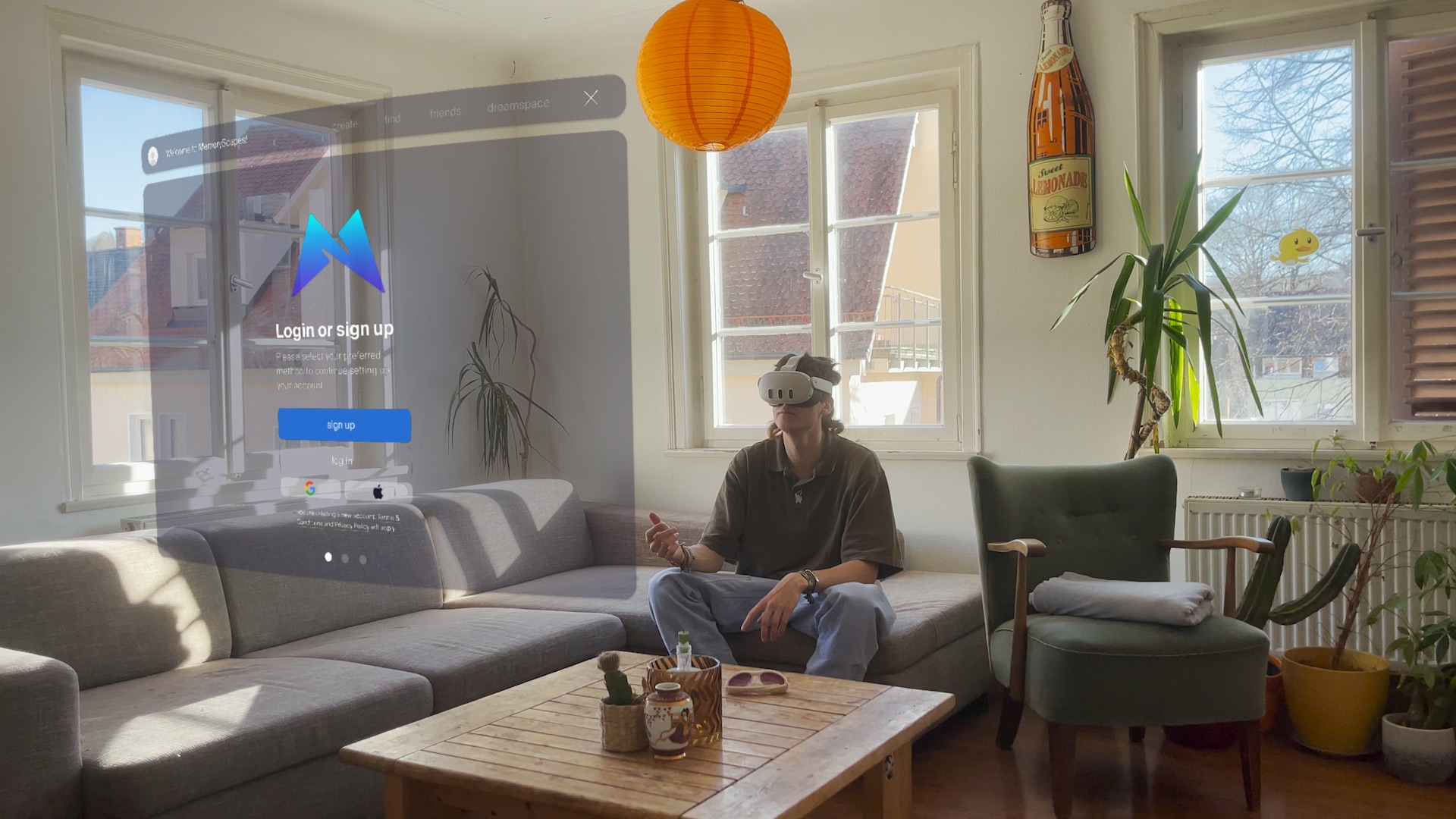
Developed within the course Invention Design II, Memory Scapes explores how emerging technologies can extend the meaning and usefulness of everyday objects. The course focuses on moving beyond the limits of current products by first understanding rapidly evolving technologies and then translating these capabilities into meaningful product concepts. Memory Scapes is a conceptual digital system that adds a “memory layer” to physical objects, allowing them to store, recall, and communicate personal experiences, contextual information, or knowledge. By linking digital memories to everyday items, the system creates a seamless bridge between the physical and digital worlds. Ordinary objects gain extended functionality: kitchen utensils can store and replay recipes, personal items can hold emotional memories, and objects can provide educational or historical context based on their use and history. Rather than replacing physical interaction, Memory Scapes enhances it, embedding digital meaning directly into daily life.
Role & Scope:
This project was a collaborative effort among three people over the fourth semester. We collectively developed the core concept and defined the system architecture. I took additional ownership of the project video production, including filming, editing, and applying visual effects (VFX) using After Effects, to clearly communicate the abstract concept and future vision as well as work on an additional proof-of-concept prototype for the semester exhibition, specifically using the Meta Quest 2 and Unreal Engine 5 to demonstrate the VR playback experience. I also contributed to the creation of the general User Interface (UI) design, while my partners focused primarily on the broader UI design.
Research / Methods
The project followed a technology-driven, speculative design approach. Instead of starting from a predefined problem, I began by exploring the possibilities emerging from recent technological developments.Through research, ideation and scenario building, I investigated how memory, meaning, and personal context could be externalized and attached to objects. To communicate the experiential dimension of Memory Scapes, I combined cinematic storytelling with interactive prototyping. The VR proof-of-concept allowed users to experience how memories could be spatially and emotionally recalled, reinforcing the system’s core idea.